

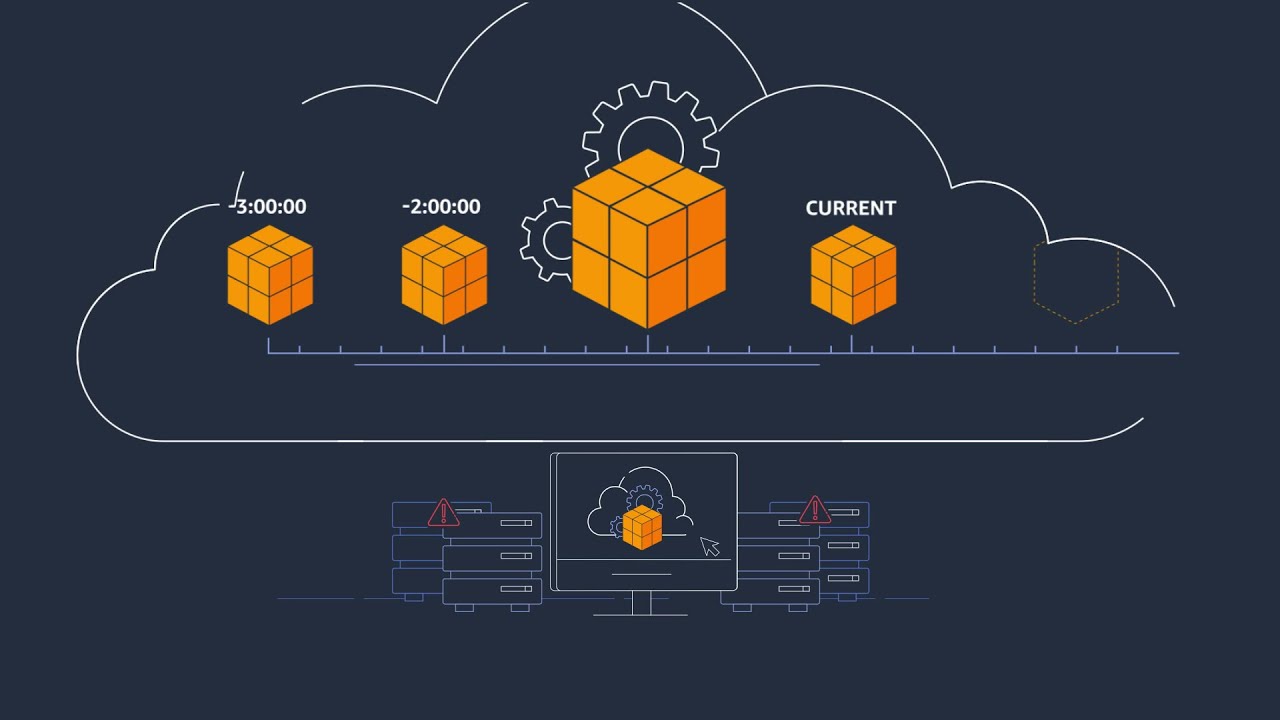
In today’s rapidly evolving digital landscape, having a robust disaster recovery (DR) plan for
Oracle JD Edwards EnterpriseOne (JDE E1) is vital. Particularly for organizations running JDE E1 on the AS400 (IBM iSeries), cloud-based DR solutions can seem daunting.
However, AWS provides a mature, secure, and scalable platform that simplifies the most complex DR scenarios—ensuring minimal downtime, reduced data loss, and cost-efficiency for all JD Edwards environments, from on-premises to the cloud.
Key Takeaways:
- Global Footprint & High Availability: AWS Regions and Availability Zones enable quick failover and geo-redundancy.
- Scalability & Elasticity: Pay only for what you need, ramping up resources during failover without costly idle hardware.
- AS400 Integration: AWS can handle legacy systems, ensuring AS400 data is replicated and protected in near-real-time.
- AutoDeploy Expertise:
AutoDeploy has architected DR solutions for JDE E1 customers in the cloud, customers running on-premises, and customers using an AS400—streamlining even the most intricate disaster recovery requirements. - Low-Cost Storage Gateway: Tape Gateway and Storage Gateway provide affordable, durable backups for legacy tape-based environments.
Why AWS for JD Edwards E1 DR?
| Aspect | AWS | Traditional On-Premises | Other Cloud Providers |
|---|---|---|---|
| DR Architecture | Flexible: Pilot Light, Warm Standby, Multi-Site | Expensive hardware, underutilized standby | Less variety of prebuilt DR patterns |
| Scalability | Elastic, pay-as-you-go resources | Limited by physical capacity | Depends on region presence and service availability |
| AS400 Support | Storage Gateway, replication to AWS, partner solutions | On-prem tape and proprietary solutions | Mixed, may require specialized third-party tools |
| Cost Model | Pay-as-you-use, cost-optimized storage tiers | Large CapEx, hardware refresh cycles | Varies widely, potential hidden egress fees |
| Global Reach | Many Regions and AZs for geo-redundancy | Single data center or on-prem cluster | Some providers have fewer global regions |
With AWS, you gain the advantage of a global footprint, elastic scalability, and proven reliability—key factors in ensuring JD Edwards E1, including AS400 workloads, can be recovered quickly with minimal data loss.
Key Components of a JD Edwards E1 DR Strategy on AWS
From on-premises replication to fully cloud-native setups, AWS offers a breadth of services and approaches for disaster recovery:
- Pilot Light: Maintain minimal resources in AWS (e.g., critical database and application components) for quick scale-up when disaster strikes.
- Warm Standby: Keep a scaled-down version of your entire environment running in AWS, accelerating failover times.
- Multi-Site / Active-Active: Run production in multiple regions or hybrid configurations for continuous availability.
1. Handling Complex AS400 Requirements
Many organizations rely on the IBM AS400 (iSeries) to power their JDE E1 workloads. AWS addresses the complexity of replicating data from AS400 environments in a few ways:
“AWS can manage the most complicated tasks for JD Edwards EnterpriseOne, including environments running on AS400—replicating data and offering near real-time backups.”
- DB2 Data Replication: Stream your DB2 data into AWS for continuous backups or near-synchronous replication.
- Hybrid Integration: Retain your AS400 on-prem but store backups and run DR resources in AWS.
- Automated Failover Testing: Use AWS native services or partner tools to run frequent DR drills without significant downtime.
Here’s where AutoDeploy truly shines. AutoDeploy has architected DR solutions for customers across various environments—fully in the cloud, on-premises data centers, and AS400-based setups—ensuring seamless failover and rapid recovery tailored to each organization’s unique needs.
2. Leveraging Tape Gateway & Storage Gateway for Cost-Effective Backups
Traditional tape-based backups are familiar to many JD Edwards E1 AS400 users, but on-premises tape storage can be expensive to scale and manage.
AWS Storage Gateway—particularly Tape Gateway—provides a straightforward, low-cost solution to modernize these legacy backup processes:
| Gateway Type | Use Case | Benefit |
|---|---|---|
| Storage Gateway | Local iSCSI or file interface | Seamless hybrid storage for backups and archives |
| Tape Gateway | Virtual Tape Library (VTL) emulation | No changes to tape-based backup software; cost-effective cloud archives |
- Minimal Changes: Continue to use tape commands on your AS400, now pointed at a virtual tape in AWS.
- Cost Savings: Avoid expensive physical tape libraries, offsite vaulting, and manual handling.
- Enhanced Durability: Data is stored in
Amazon S3 or Amazon S3 Glacier, which provide high durability and long-term archiving options.
3. Architecting a Comprehensive DR Stack
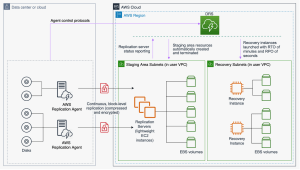
A robust DR plan for JD Edwards E1 should address compute, storage, databases, and orchestration. Here’s what a typical AWS-based DR architecture might look like:
- Compute & Network:
Amazon EC2 instances in a separate region, configured via Amazon VPC for security and isolation. - Storage & Backups:
AWS Storage Gateway, Amazon S3, and Amazon S3 Glacier for cost-optimized backups. - Database Replication:
For Oracle or DB2, consider streaming or snapshot replication to a DR environment in AWS. - Orchestration & Monitoring:
AWS CloudFormation, Amazon CloudWatch, and AWS Backup can automate failover and track performance in real time. - Failover & Testing: Amazon Route 53 for DNS-based failover and routine DR drills.
AutoDeploy integrates seamlessly with these AWS services, enabling rapid provisioning, standardized patching, and minimal human error—whether you’re protecting a cloud-based environment, an on-premises data center, or an AS400 system.
4. Conclusion
Disaster Recovery for JD Edwards EnterpriseOne on AWS is not only feasible but frequently more resilient and cost-effective than traditional on-premises approaches. AWS can seamlessly accommodate the needs of AS400 users, providing near real-time replication, automated failover testing, and robust backup capabilities with Tape Gateway and Storage Gateway.
AutoDeploy has architected DR solutions for customers running JDE E1 in the cloud, on-premises, and on AS400
proving that modernization doesn’t have to be intimidating. By combining AWS’s global infrastructure with AutoDeploy’s specialized frameworks, you gain a secure, scalable, and low-cost way to protect your mission-critical JDE E1 workloads—no matter how complex your current setup might be.
In the end, adopting a modern DR strategy on AWS gives you peace of mind, ensuring your business stays operational through unforeseen disruptions while reducing overhead and boosting agility. If your organization is ready to take the next step, explore how AutoDeploy and AWS can help you build a robust, flexible DR solution tailored to your JDE E1 environment.
When was the last time you tested your disaster recovery planning? If it’s been awhile please reach out to AutoDeploy and let’s discuss modernizing your DR architecture.
FAQs
Which AWS service is best for tape backups?
Tape Gateway is part of
AWS Storage Gateway
and is the recommended service for organizations looking to modernize tape backup. It emulates a physical tape library, allowing you to continue using existing backup workflows while leveraging the cost efficiency and durability of AWS storage.
Can AWS’s DR solutions work with my AS400-based JDE E1 system?
Absolutely. AWS supports hybrid scenarios and specialized replication tools for DB2 on the AS400. Combined with
AutoDeploy,
you can replicate, back up, and failover your mission-critical data without overhauling your entire legacy infrastructure.
Why choose AutoDeploy for DR?
AutoDeploy simplifies and automates JD Edwards lifecycle management on AWS—whether you’re fully in the cloud, on premises, or running AS400. From provisioning to patching, AutoDeploy reduces manual errors and speeds up recovery time, ensuring your DR strategy is reliable, consistent, and easily testable.
